


Privacy Policy | Terms & Conditions | Refund Policy
Copyright PivotHolisticHealth.com © 2016. All rights reserved.
Web Development by Socialfuel, LLC | Chief Editor: Christina DeFrancesco
Type 2 diabetes is on the rise in America. Many think it is because of the highly refined carbohydrates, such as white bread and added sugar that can be found in almost any processed food. Some symptoms of diabetes are frequent urination and increased thirst. The body needs the pancreas to produce insulin to help the body get the glucose from food into the cells in the body, where the glucose can be used. The body becomes insulin resistant when someone is type 2 diabetic and the pancreas must produce more insulin to get the glucose into the cells. Someone that is becoming insulin resistant will produce increased amounts of glucose for a time. Eventually, the pancreas can not keep up and the glucose remains in the blood and can not get into the cells. If the glucose stays in the blood vessels they actually cause damage to the vessels and possibly to the organs the blood vessels supply. This can lead to vision problems and is the leading cause of blindness in the US. Excess glucose in the blood vessels also causes nerve damage, kidney damage, heart disease, stroke, foot damage, skin infections, hearing problems, poor blood circulation, and possibly even Alzheimer’s disease. [1] Please check with your doctor to see if you are diabetic. Early detection can help prevent complications from diabetes.
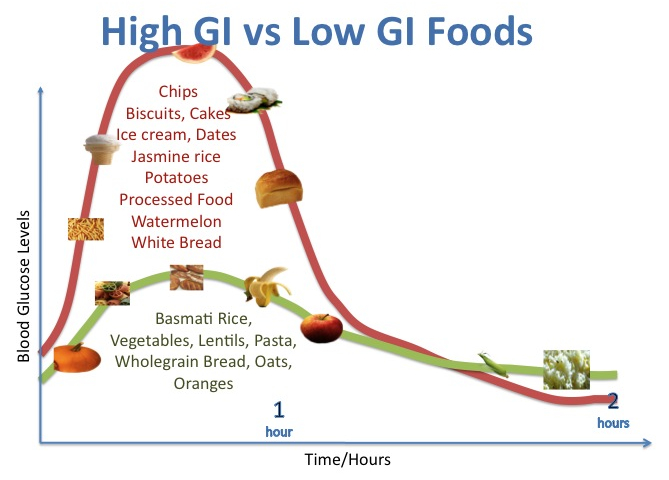
If you are trying to be sure that the food you eat does not spike your blood sugar you can check for the glycemic index. Some foods such as refined carbohydrates, sugar, soda, white bread, candy etc. raise the blood sugar very fast. Someone who is insulin resistant might not be able to handle these sharp spikes of glucose in the body. Foods with a higher fiber, protein, and lipid content will most likely have a more steady stream of glucose in the blood VS a spike like foods with a high glycemic index. The glycemic load takes into account of the total carbohydrate content and portion size. How a food is prepared can also change how the food releases glucose into the body.
Starch, glucose, fructose, sucrose, and lactose can all spike your blood sugar levels. Glucose and sucrose enter the bloodstream quickly. Starches are chains of glucose but they break up quickly and enter the blood stream quickly, this is reflected in the glycemic index number.
When we eat food that is natural and not refined or processed it is more likely to have a symphony of nutrition. It will have vitamins, minerals, fiber, protien, even fat- which are slow to digest and help lower the glycemic index. For example, eating an apple you have a high fiber content VS soda, there is no fiber and the sugar in the soda hits the blood stream fast and spikes insulin levels.
To learn what a foods glycemic index is use a site like this one. If you are diabetic, aim for foods that are low on the glycemic index:
http://www.health.harvard.edu/diseases-and-conditions/glycemic_index_and_glycemic_load_for_100_foods