


Privacy Policy | Terms & Conditions | Refund Policy
Copyright PivotHolisticHealth.com © 2016. All rights reserved.
Web Development by Socialfuel, LLC | Chief Editor: Christina DeFrancesco
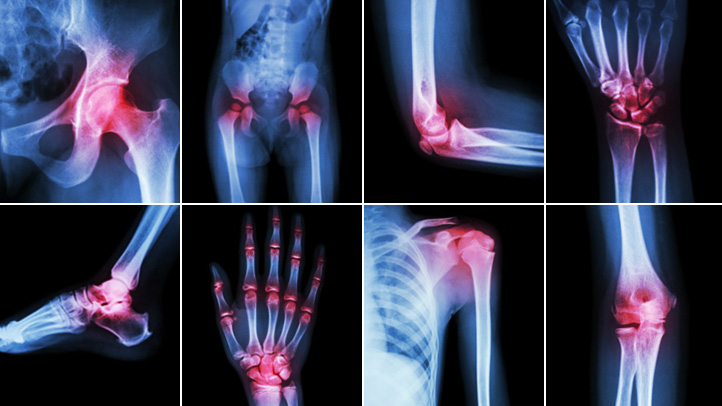
One of the most common reasons I hear people cite for not working out is that they have some existing issues. For injuries such as spinal injuries I would definitely take those very seriously and consult with a doctor every time you add a new exercise into your workout protocol. The information shared here is in no means a replacement for consulting with your doctor. This article should however help to give you an idea of what to discuss with your doctor on your next visit.
Having spent many years working with athletes- doing sports medicine for high schools, colleges and professional organizations, I’d say the most common places for injury are back, knee, ankle, shoulder, elbow and wrist. As I mentioned, the spine is complex and should be taken very seriously. If you would like to know more about spinal injuries I will touch on it briefly at the end of this article.
Ankle, knee, elbow, and shoulder- these injuries are often not as extensive as spinal or internal injuries. If you have had an injury that has been lingering around for a while, especially with in or around a joint, it may be wear and tear, inflammation or arthritis. This is common as we age. Additionally, some people suffer from impingement injures. Impingement is when nerves and/or arteries become entrapped in the structures they run though or close to (such as a joint or muscle). If you are having numbness and tingling this could be a sign of an impingement injury. For these type of injuries, sometimes there are muscle imbalances, which in turn affect joint posture, causing impingement. Sometimes balancing the musculature through stretching and strengthening can help place the joint back into a more natural positioning. Other times, problems with form during activity may be the culprit. These things are all things an athletic trainer specializes in recognizing.
Something as simple as keeping your core tight while working out can make so many differences- not only in the effectiveness of your work out but also help with injury prevention. For these reasons, I recommend finding someone who’s trained to help you begin the work out process if you are 1) Just now implementing a new exercise regimen 2) If you are not currently moderately conditioned or 3) You are new to working out in general.
Some tips and pointers:
1) Gradual. Please go gradual. Pick some basic exercises, that are pain free, get used to that routine first. Slowly add more exercises (one at a time). Then as you are ready, slowly make your workouts longer or slowly increase intensity.
2) Workout in front of a mirror. Simply because you can keep an eye on your form. Athletic trainers watch for things like- keeping your shoulders back while working out your arms or how to position your knees and back while doing a squat. These activities work so much better when the force is being generated properly and more importantly, decreases the risk of injury.
3) Listen to your body, those twinges of pain are telling you something is going on. It’s better to get to the root of the problem than to ignore it, cover it up with pain relievers or to avoid exercise. Avoiding exercise only leads to more long term health issues.
4) Allow for recovery days- avoid working out the same muscles consecutive days a row when lifting weight.
Part two of this blog will describe some activities that someone with an existing injury or weakness might be able to utilize.
A word on the spine:
There are intervertebral disks that naturally become less functional with age. Think of a disk like a jelly filled doughnut, our disks have the same shape and even have the jelly filled center inside. These disks are found between your vertebral bones and help absorb shock and allow for movement of the spine. Just like a jelly doughnut, the jelly of the disk can protrude out too. The tricky part here is that there are nerves that run through spaces between the vertebrae. That intervertebral space is greatly affected by the condition of the disk and if the jelly inside the disk has ruptured (just like an egg yolk would rupture). A ruptured center of a vertebral disk can come out of the disk space and into the space of a nerve, causing nerve issues. Also, sometimes the actual spinal bones have deformity or degeneration can also affect the intervertebral space.
With spinal injuries it is even possible to feel pain in a different part of the body when in fact, the pain is actually originating in the spine. For those reasons, if you have back pain or know you have a spinal problem please go to see a doctor and ask them to explain exactly where your defect is located, what symptoms it causes, what’s the prognosis, what activities are acceptable, and which activities to avoid. There also might be activities or exercises you can do to strengthen the muscles around the injured areas. Strengthening the surrounding musculature can take stress off the injured structures. You must strengthen these areas properly and as always form during activity is critical when dealing with any injury.