
A New Years Present!

Exciting news! All premium website content will be unlocked for everyone to view and utilize through 1/24/17! All the categories in the blog are currently open to the public. I want to do anything I can to make 2017 the year of health for you!
Wishing you a Healthful and Happy 2017!
*If you are already subscribing you will be credited one month!
- Published in Public Blog
Mindfulness, First Concepts

I’m here to shatter a common myth most people have when I comes to mindfulness training. Mindfulness is often misunderstood as often people picture someone sitting crossed legged, eyes closed, in a silent room…meditating. Although there are lots of great benefits to this type of practice you don’t need to be that formal in your training. It also doesn’t have to have any spirituality associated with it, even cognitive behavioral therapists are seeing the benefits of mindfulness!
You can practice mindfulness as you do chores, as you workout, as you play with your child…
All mindfulness really means is 1) being aware of your thoughts- some people call it observing your internal dialog 2) being fully present and in the moment and 3) being NON-JUDGMENTAL about your observations.
The last one is often the one people have particular trouble with. Humans are often conditioned to think if they did not get the optimal outcome we have failed at our task. Well, that is not how I have been taught at all. Every time we make an effort to practice we be sure to thank ourselves for taking the time to practice. Even if we had the worst session ever, even if we couldn’t control and focus our mind, we don’t judge ourselves, instead we observe and say- well, I was really distracted today. Some places my mind wandered are X, Y and Z. Observe without creating judgement.
The most vital concept: Single point of focus. You can use almost any experience as a time to practice mindfulness. Be fully there in that moment. We rush though life, trying to get from point A to point B without enjoying or even really experiencing the journey because our minds are so focused on the destination. While brushing your teeth, eating a meal or even doing the dishes- just observe the whole experience. For example when brushing your teeth: watch how the toothpaste comes out of the tube onto the brush, feel the temperature of the water, listen to the sound it makes as it falls to the sink, feel the bristles of the brush on your gums….
Let your mind be here, not at work, not about the last facebook post you just read- be just be in THIS moment.
This is a practice and by practicing now, you strengthen your ability to do it in times you really need to focus your mind and you will become so much more aware in general.
Often, when we are anxious we are living in the future, when we are depressed we are living in the past. That is a paraphrased quote by Lao Tzu but I really think it makes a great point. Especially today, when we have so much input, so much distraction, so many comparisons. We see something and it reminds us of something that bothers us or something we have yet to achieve. Our mind gets in a rut, focused on that one negative thing. This concept leads right into another benefit of mindfulness, learning to control rumination. According to Wikipedia, rumination is defined as the “compulsively focused attention on the symptoms of one’s distress, and on its possible causes and consequences, as opposed to its solutions”.
Having now been introduced to these concepts you can now see how mindfulness, particularly observing and learning to better control the flow of your thoughts, can be very useful. When you observe your mind going down a stressful path, stop it, then refocus the mind on something constructive.
Further progression in mindfulness training: There is a threshold we cross when worry becomes more harmful that beneficial. There is a nice training session where we experiment with this concept and learning how to “lean into” the thoughts that are bothering us but this session is paired with a powerful method to get your mind back into a more positive mental space afterwards. I recommend that session be done in person. It is a powerful tool indeed. If you are interested in incorporating either of these practices in your consultation package the first one I call the “Present Moment” training and second one is called the “Lean Into” session.
- Published in Mindfulness Training, Public Blog
How to Work Around Existing Injuries While Working Out- Part 1

One of the most common reasons I hear people cite for not working out is that they have some existing issues. For injuries such as spinal injuries I would definitely take those very seriously and consult with a doctor every time you add a new exercise into your workout protocol. The information shared here is in no means a replacement for consulting with your doctor. This article should however help to give you an idea of what to discuss with your doctor on your next visit.
Having spent many years working with athletes- doing sports medicine for high schools, colleges and professional organizations, I’d say the most common places for injury are back, knee, ankle, shoulder, elbow and wrist. As I mentioned, the spine is complex and should be taken very seriously. If you would like to know more about spinal injuries I will touch on it briefly at the end of this article.
Ankle, knee, elbow, and shoulder- these injuries are often not as extensive as spinal or internal injuries. If you have had an injury that has been lingering around for a while, especially with in or around a joint, it may be wear and tear, inflammation or arthritis. This is common as we age. Additionally, some people suffer from impingement injures. Impingement is when nerves and/or arteries become entrapped in the structures they run though or close to (such as a joint or muscle). If you are having numbness and tingling this could be a sign of an impingement injury. For these type of injuries, sometimes there are muscle imbalances, which in turn affect joint posture, causing impingement. Sometimes balancing the musculature through stretching and strengthening can help place the joint back into a more natural positioning. Other times, problems with form during activity may be the culprit. These things are all things an athletic trainer specializes in recognizing.
Something as simple as keeping your core tight while working out can make so many differences- not only in the effectiveness of your work out but also help with injury prevention. For these reasons, I recommend finding someone who’s trained to help you begin the work out process if you are 1) Just now implementing a new exercise regimen 2) If you are not currently moderately conditioned or 3) You are new to working out in general.
Some tips and pointers:
1) Gradual. Please go gradual. Pick some basic exercises, that are pain free, get used to that routine first. Slowly add more exercises (one at a time). Then as you are ready, slowly make your workouts longer or slowly increase intensity.
2) Workout in front of a mirror. Simply because you can keep an eye on your form. Athletic trainers watch for things like- keeping your shoulders back while working out your arms or how to position your knees and back while doing a squat. These activities work so much better when the force is being generated properly and more importantly, decreases the risk of injury.
3) Listen to your body, those twinges of pain are telling you something is going on. It’s better to get to the root of the problem than to ignore it, cover it up with pain relievers or to avoid exercise. Avoiding exercise only leads to more long term health issues.
4) Allow for recovery days- avoid working out the same muscles consecutive days a row when lifting weight.
Part two of this blog will describe some activities that someone with an existing injury or weakness might be able to utilize.
A word on the spine:
There are intervertebral disks that naturally become less functional with age. Think of a disk like a jelly filled doughnut, our disks have the same shape and even have the jelly filled center inside. These disks are found between your vertebral bones and help absorb shock and allow for movement of the spine. Just like a jelly doughnut, the jelly of the disk can protrude out too. The tricky part here is that there are nerves that run through spaces between the vertebrae. That intervertebral space is greatly affected by the condition of the disk and if the jelly inside the disk has ruptured (just like an egg yolk would rupture). A ruptured center of a vertebral disk can come out of the disk space and into the space of a nerve, causing nerve issues. Also, sometimes the actual spinal bones have deformity or degeneration can also affect the intervertebral space.
With spinal injuries it is even possible to feel pain in a different part of the body when in fact, the pain is actually originating in the spine. For those reasons, if you have back pain or know you have a spinal problem please go to see a doctor and ask them to explain exactly where your defect is located, what symptoms it causes, what’s the prognosis, what activities are acceptable, and which activities to avoid. There also might be activities or exercises you can do to strengthen the muscles around the injured areas. Strengthening the surrounding musculature can take stress off the injured structures. You must strengthen these areas properly and as always form during activity is critical when dealing with any injury.
- Published in Fitness, Public Blog
What Base Should I use for my Smoothies? (Part I)

Today we have so many options of liquids to use in our smoothies. The liquid portion is vital because we need liquid to allow the blades to move freely and breakdown the fruits and vegetables we have placed in the blender.
Here are some of the liquids I have used, they each have their own advantages.
ORANGE JUICE: This one is a good one for beginners. This will help the overall taste of the smoothie become sweet. Be careful using this one if you have a propensity to suffer from acid-relux. Oranges are acidic by nature. Obviously, if you are using a protein powder that has a flavor that may conflict with OJ, such as chocolate, this might not be a good option. In general, there are chocolate, mocha, coconut and other similar “themes” and also a fruit based flavor targets you can use for smoothies. OJ is a good one if you are trying to get a fruity taste. I buy the not from concentration 100% juice OJ option. Beware not all OJ is created the same, spend the extra couple dollars and get a good one. You are worth it! OJ is high in vitamin C, which is a great antioxidant! Folate, thiamine and potassium are also found in OJ.
Prune Juice: I have actually only recently started to use this one. It provides a nice fruity flavor. I had heard about the benefits of prune juice for years. Mainly hearing that prune juice was good for digestion. It was not until I was studying about both vitamin B6 and iron deficiencies that I discovered prune juice is high in both of these nutrients. It is also a good source of potassium. I have now added this juice into my smoothie regimen permanently. For nutrition: iron, B6, manganese, potassium and fiber.
SOY MILK: This is one I used for many, many years. It was actually my go to for my smoothies. Sadly, there has been some controversy recently about ingesting large amounts of soy. Some people believe the estrogen found in soy negatively affects our bodies, men and women alike. One claim is that the estrogen in soy can interact with our own estrogen receptors and can promote breast cancer. I stand by the moderation is key theory and I am not quite willing to accept the dangers of soy as fact- I have switch to primary almond milk just as a precaution. As far as taste, I have always had luck with soy. It goes in every kind of smoothie I can think of. I am pretty “hardcore” and go with the organic, non-GMO, unsweetened option. There is a sweetened soy milk that you might want to buy if you plan to drink it outside of your smoothie. For nutrition here is what we have: a good source of protein, vitamin K, folate, iron, manganese, phosphorous and copper.
ALMOND MILK: As I mentioned. This is my new go to for my smoothies. It lasts a long time in the refrigerator, it has a great taste in smoothies and goes with almost anything. Be aware almond milk however, is not a good source of protein. Also, buy the organic, non-GMO variety. I go with unsweetedned but like I said with the soy, if you plan to drink outside of smoothies, you might want a flavored one. For nutrition: almond milk is a good source of vitamin A, D, E and calcium.
Be sure to check back for:
What Base Should I use for my Smoothies? (Part II) where we will go over cows milk, coconut milk and other juices– their benefits and draw backs.
- Published in Public Blog, Smoothie Making, Smoothie Making Resources
It’s Fall, Spaghetti Squash is in Season!

Spaghetti squash is a great substitute for high calorie pasta. The same sauces used on pasta will also work well with spaghetti squash! It is delicious with marina or Alfredo sauce with shredded Parmesan cheese on top. Some meats to add into this dish are shrimp, chicken or ground beef or turkey. If you are feeling daring, you can even sweeten up the squash with a little brown sugar and cinnamon for a delicious and healthy fall treat!
Cooking spaghetti squash is very easy. Preheat the oven to 375 degrees. The toughest part is cutting it in two. The ends are very tough so start in the center and cut towards both ends with a large knife. Usually the knife stops when you get to the ends so go to the opposite side of the squash and repeat your cuts. Once both sides are cut it is pretty easy to crack open. It doesn’t have to be perfectly in two to cook, some uneven edges are fine. Scoop out the all the seeds with a spoon, discard. Place squash in a flat cooking pan that has a rim. I use a large rectangle cake pan. Place squash pulp down and add water to about 1/2-1 inch above edge of squash. Then simply place squash in the oven. Depending on the size of your squash it could take 30-50 minutes to cook through. Add more water if the bottom of the pan becomes exposed during baking. Once you can pierce the skin of squash with a fork it is done. Pull out of the oven and let cool. After it is cooled, simply take your fork and run it across the flesh of the squash. It will come off just like spaghetti! From here you can add a little butter or olive oil, salt, pepper and/or garlic powder to taste if you wish. Some might enjoy the squash just like that or add sauce, cheese and protein and voilà, you have a low carb substitute for pasta!
Enjoy!
Regular Spaghetti VS Spaghetti Squash:
- Published in Eating for Health Resources, Public Blog
Why the Water we Drink is Vitally Important-Part I

As you know water, makes up over half the mass of our bodies. Water has a critical role in helping your body to function properly. Not only does it keep you hydrated but also is used by your kidneys, skin and other systems to eliminate built up wastes (toxins, salts, and by-products). Your body is a factory and warehouse. So many productions happen there. Just like any factory, it also produces waste. It has to have a means to eliminate that waste.
As we sweat, our body shuffles these byproducts like ammonia and other substances out of our body by the process of sweating. Likewise, the kidneys filter the waste from the blood and transfers those wastes to urine. I could give many examples of these elimination centers in the body but all of those systems have one thing in common, at some point, they need water to function properly and do their job. It helps with the flushing actions/mechanisms. As you can see, there are many reasons your body needs an adequate supply of water. Not to mention- drinking water also makes your skin look more full and healthy. Bonus!
So, how do we measure our water intake? Is it a hassle?
Well, for me, I carry a 1.5 liter everywhere I go. I do get my water delivered as I am skeptical of tap water for many reasons but the most obvious is the unknown condition of the pipes my tap water travels through to get to me. Everyday I aim to fill my 1.5 liter up at least twice a day. Many sources say to drink between 2 to 3 liters per day. The more you weigh and the more active you are, the more water you will need. One of the most important times to drink water is first thing after you wake. Your body is in a fasted state and often dehydrated state from hopefully being asleep for a full 8 hours. Well, we hope eight hours, ha! Sleep that’s a whole other subject, it is also critical for health in many unique ways.
Attention soda and coffee drinkers:
When we drink drinks that have dissolved substances already in them, such as sugar, we are not giving our body a clean base in which to eliminate wastes. In some aspects we are adding more steps because we have to metabolize the drink and filter out the water portion. This produces more by-products. As you can see, someone who drinks mainly soda or coffee has a unique set of issues, so please be sure to add water and/or water with lemons to your daily beverage selection.
If you get bored with the taste of water, there are water infusers for fruit and even cucumbers (or just pop pieces in your water). There are teas that you might enjoy too. Buy organic tea if possible and be aware tea can contain caffeine. It is possible to explore teas, coffee, and caffeine in another blog (leave any requests in the comments if you would like a topic expanded on).
A word on artificial sweeteners:
I’m not really sold on any of them. Partially because these artificial sweeteners are relatively new compounds to be put in the human body. However, a lot of people I believe to have a good background on this topic seem to like Stevia. Personally, I remain hesitant to ingest any artificial sweeteners. For tea, I sometimes use honey.
People who like sweets, refined foods, fried food, foods with long shelf lives, and/or artificial ingredients should definitely drink a little more water than normal. Just like the artificial sweeteners, many of those chemicals and compounds have been added to the food relatively recently and unfortunately the body can not do a lot useful things with those un-natural compounds, so it tries to eliminate them through various body systems that need water to function.
So raise up that water glass! Cheers to good health!
- Published in Eating for Health, Public Blog
Common Starter Smoothie Fruits and Vegetables
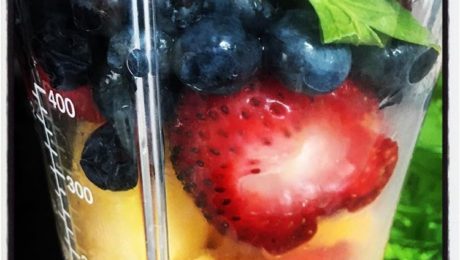
Common Starter Smoothie Fruits and Vegetables
(Fresh is best but frozen is acceptable)
Fruit
- Raspberries
- Blueberries
- Banana
- Grapes
- Pineapple
- Peaches
- Nectarines
- Watermelon
- Kiwi
- Cantaloupe
- Honeydew
- Strawberries
Vegetables
- Spinach
- Kale (baby kale)
- Published in Public Blog, Smoothie Making Resources
We Live in a “Food Desert”

What does a food desert even mean?!?! It is a phrase that has been born out of Americas obsession with fast, convenient, and cheap food. Corn is a crop that is subsidized by the government. The reason, as it was explained to me, is partially because corn can be harvested and then preserved to last for years after the harvest. When people are investing in a crop they want to make sure the investment yields the most product as possible. If we grew spinach, we might not sell it all in the week or so window we have to sell it before it spoils. If you have corn you can dehydrate it and make things like cereals and other products that have a very long time to sell before it goes bad. The thing is, the process of preserving the food takes away from the nutritional content. When you heat something, the molecular bonds bonds break and change configurations in the process. Sometimes the food producers will add synthetic vitamins into the processed and preserved food because they know they have ruined a significant amount of the natural nutritional value in the food. There is a lot of concern that these synthetic vitamins do not react in your body as a natural, food based nutrient would.
Also, chemical preservatives are used in our conveniently prepackaged and ready to eat foods. I will go in depth more about this in another blog because this is a very interesting and hot topic where there is a lot of concern and much confusion too. Ultimately, I believe, that our body is delicate and the least amount of foreign chemicals we put in our body the more natural state our body will remain in. The whole point of this topic is to simply highlight that day in and day out we eat these foods that are lacking proper nutrition because they are convenient. Our body has a very long list of REQUIRED nutrients, also antioxidants are so vital to preventing disease states and can be found in fresh fruits and vegetables. When you make a smoothie it is so easy to get these very nutrients and antioxidants that your body NEEDS. A five minute smoothie in the morning routine can literally add quality of life for years to come.
- Published in Public Blog, Smoothie Making
Our Bodies Crave High Calorie Foods Because our Ancestors Faced Times of Famine

Imagine if you will, medieval times, you are a maiden or a lord…life seems great. Suddenly, you get the news that the entire crop of food your village has been growing was wiped out by a bunch of roaming boars and now your whole village has no food for the winter. This is a terrible situation but it is a situation our ancestors faced regularly. Food was scarce, we didn’t have refrigeration and transportation. What you grew, hunted, or foraged is what you ate. Even just a hundred years ago you can see the network providing us food was not in place. Today we eat fruit from other countries in different latitudes, with different growing seasons than us. They send food to us when our grocery stores need some more selection. It’s a great thing we have going and we should all be very thankful. Additionally, we live in a first world country and we have so much food- it is way more than we need, chances are we won’t ever run out…BUT our bodies don’t know that.
Our bodies still believe we are in a feast and famine situation. Our brains give us high reward reactions when we calorie gorge. Every piece of fried food, loaded with hundred of calories does something to our brain. Our brain says to our body, this is great, please get more! Our brain wants us to eat as much as we can….just in case we have to face a famine in the near future. Here in the USA, that famine never comes. However, day in and day out we repeat this series of events. Our brain says yes, drink that chocolate milk, eat that cheese….the calorie consumption is sky high and our activity level (calorie usage) is minimal.
I think it’s liberating to understand our bodies are made to be this way. Doesn’t it make you feel a little less down on yourself to realize, it’s your brain’s fault and it’s just doing that to help you survive?! I truly believe that understanding the problem is half of the solution….
So, what’s the next step? Switching to foods we won’t over eat. Our go to foods are processed, preserved, and ladened with additives (like sugar and butter). These foods are made in a way that makes it extremely easy to over eat. When we turn back to natural foods, many times the fiber and high nutrient content make it a lot less likely to over eat. I will help you discover these foods and help you incorporate them into your life.
- Published in Eating for Health, Public Blog